Brian Carpenter (left) and Hank Buchanan, two research and development engineers at the University of Mississippi’s National Center for Physical Acoustics, work on an infrasound array sensor at Alabama A&M University’s Winifred Thomas Agricultural Research Station north of Huntsville. Credit: Shea Stewart/University of Mississippi
The cold whipping across an Alabama field on this winter morning slaps away the warmth, slowly forcing fingers and toes numb. Under a dull, overcast sky, University of Mississippi researchers trek across a damp pasture just north of Huntsville, braving the freeze and checking an array of 12 sensors that scientists at the UM National Center for Physical Acoustics are using in their research into tornado detection and tracking.
Categories:
General Awareness
Agriculture
Plants & Wildlife
–
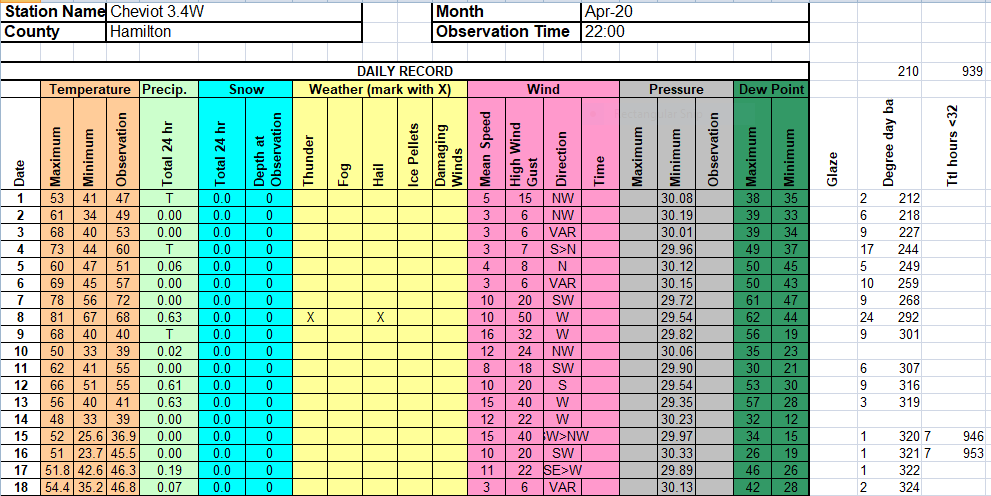
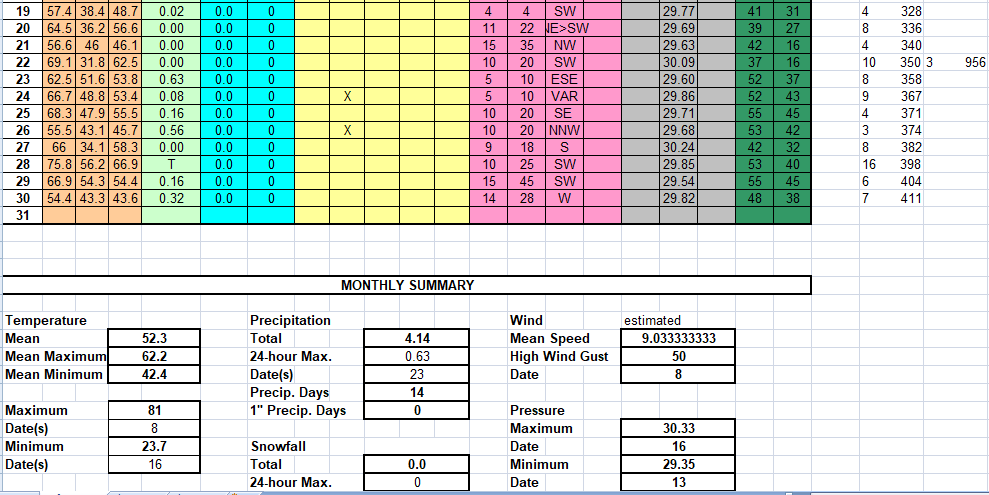
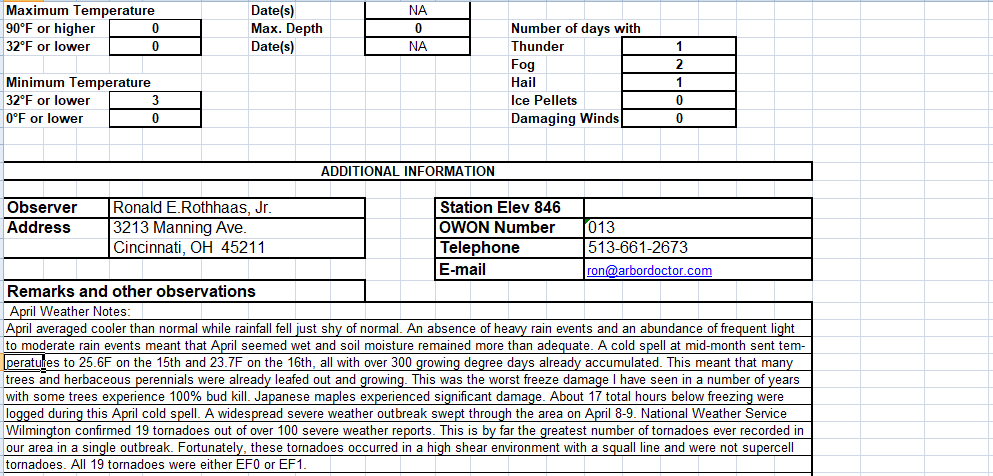
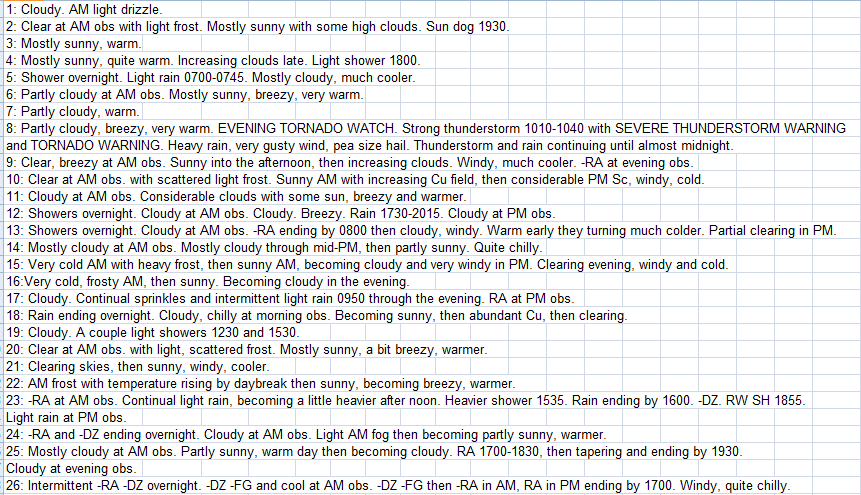
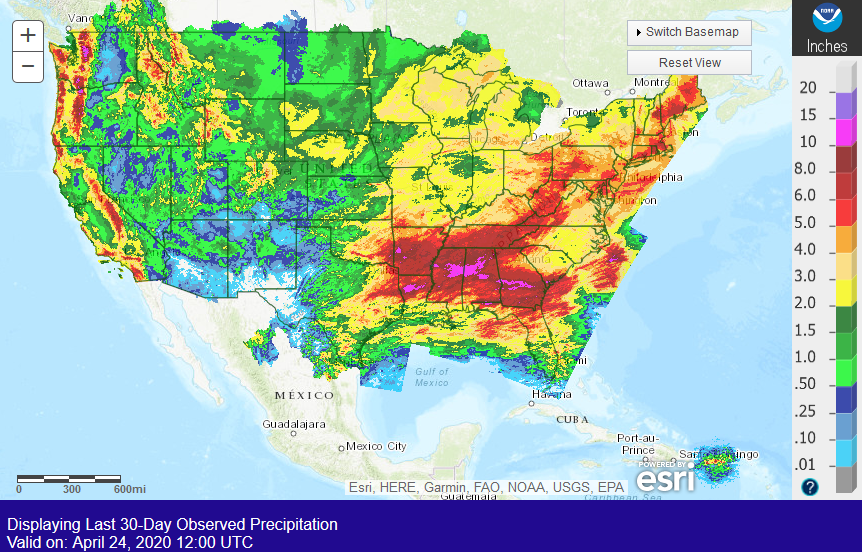
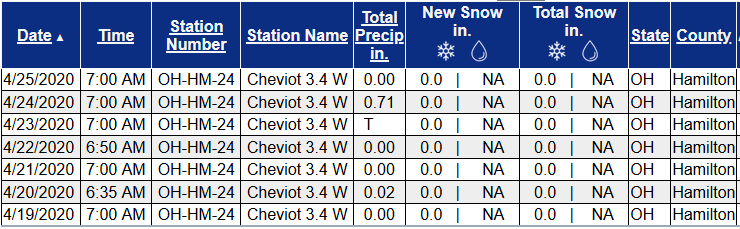
This report is specifically for the Arbor Doctor’s location 3.4 miles west of Cheviot, OH, in the western suburbs of Cincinnati in southwest Ohio. This location is also an official cooperative observation site for the National Weather Service listed as Cheviot 3W.
What is the Condition Monitoring Report? See these links for more information:
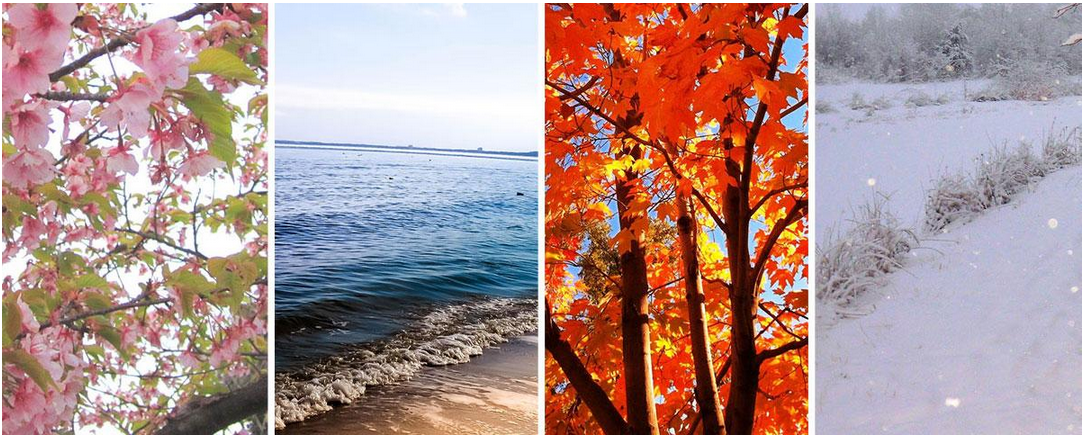
Meteorological Versus Astronomical Seasons. Spring is here!
Spring: March 1-May 31; Summer: June 1-August 31; Fall: September 1-November 30; Winter: December 1-February 28 (29)
You may have noticed that Arbor Doctor, meteorologists and climatologists define seasons differently from “regular” or astronomical spring, summer, fall, and winter. So, why do meteorological and astronomical seasons begin and end at different times? Read more here>>>
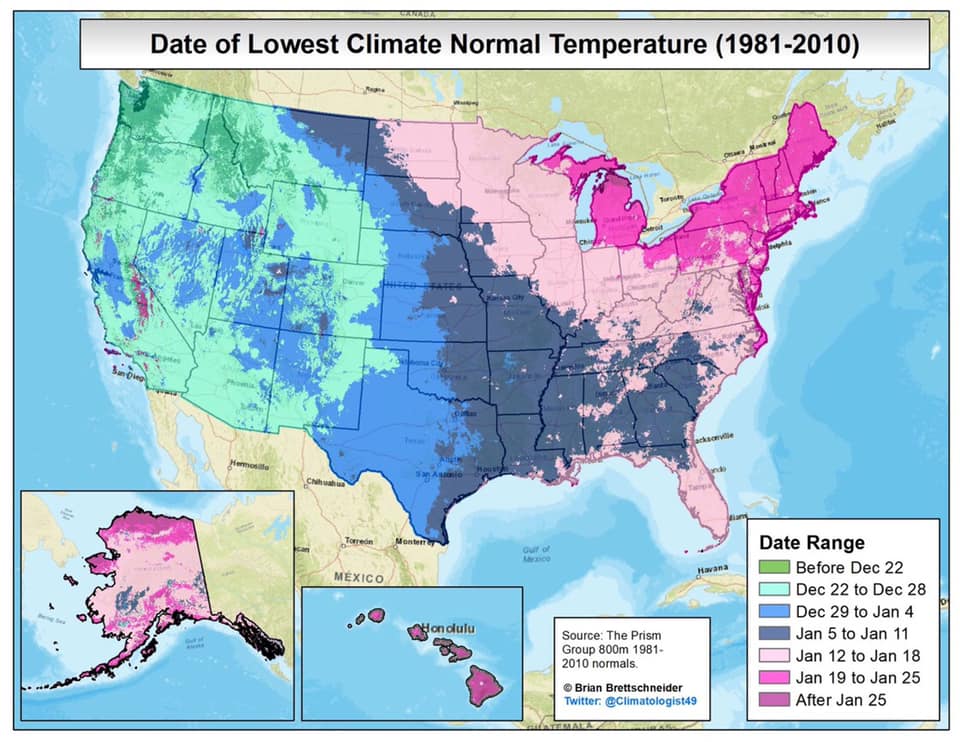
Nearly half the country has had its coldest day by the first day of calendar winter. That is why meteorological winter makes the most sense.